Glioblastoma.IT ODV Brings the Voice of Patients and Families to the AINO 2026 Congress
A brain tumor diagnosis suddenly changes the life of a person and their entire family. At that moment, therapies alone are not enough: guidance, listening, continuity of care, psychological support, and someone capable of helping patients and caregivers not feel alone are also needed.
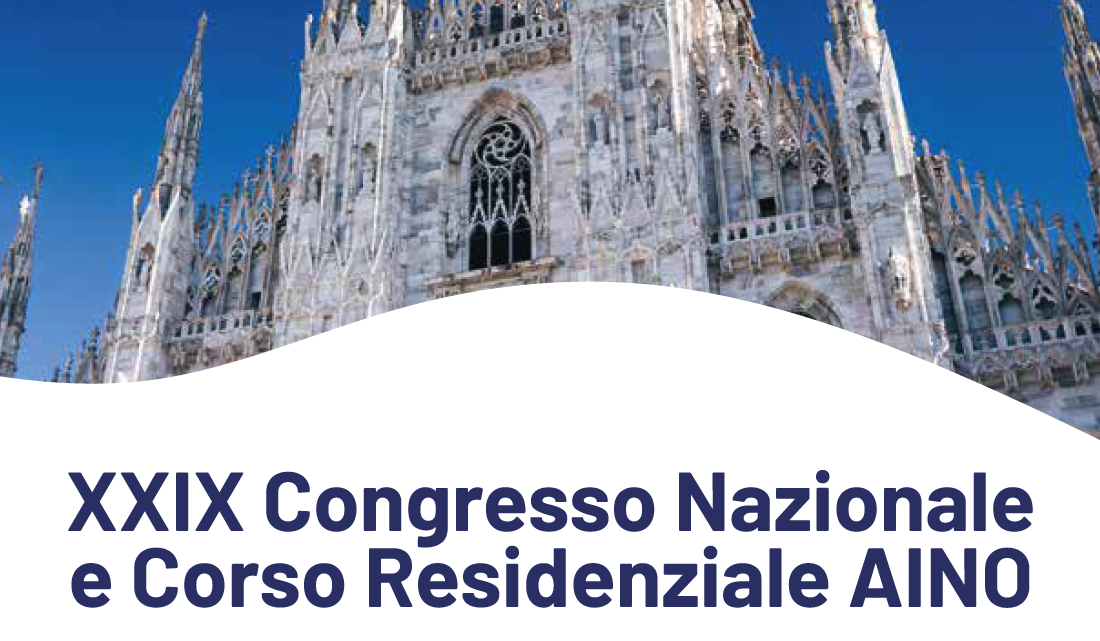
With this awareness, Glioblastoma.IT ODV took part in the 29th AINO National Congress and Residential Course, organized by the Italian Association of Neuro-Oncology in Milan on October 9 and 10, 2026. The congress brought together clinicians, researchers, healthcare professionals, and representatives of the Third Sector to discuss the present and future of Italian neuro-oncology.
The scientific part of the congress offered a broad overview of the main challenges in contemporary neuro-oncology. The topics addressed included the treatment of glioblastoma recurrence, the role of neuroradiology and nuclear medicine in follow-up, re-irradiation, targeted and experimental therapies, immunotherapy, CAR-T cells, and Tumor Treating Fields. Considerable attention was also devoted to innovations in neurosurgery, genomic and epigenomic studies, liquid biopsy, radiomics, and the use of artificial intelligence in diagnosis. The sessions also explored brain metastases, meningiomas, high- and low-grade gliomas, rare and pediatric tumors, quality of life, rehabilitation, and palliative care. Oral presentations and posters enabled research groups from across Italy to share results, clinical experiences, and new therapeutic perspectives, confirming how much progress in the treatment of brain tumors depends on the meeting of research, technology, and comprehensive care for the person.
Glioblastoma.IT ODV participated on October 9 in the allied health professionals session, entitled “Building Alliances That Transform: Co-designing Pathways in Neuro-Oncology.” The day placed a fundamental conviction at its core: the complexity of brain tumors requires truly multidisciplinary pathways capable of integrating neuro-oncology, neurosurgery, neuropsychology, rehabilitation, nursing care, palliative care, community-based services, and support for families.
In the afternoon, the round table “The Network That Cares” brought together scientific societies, federations, foundations, and voluntary organizations. Roberto Pugliese spoke on behalf of Glioblastoma.IT ODV, bringing the association’s experience and the priorities expressed every day by patients and caregivers.
Glioblastoma.IT ODV was founded in 2019 in memory of Emanuele Pugliese, who had died the previous year from glioblastoma at just twenty years of age. From that pain came a concrete commitment: to make information more accessible, help families navigate the healthcare system, and bring people closer to the opportunities offered by research.
The website glioblastomamultiforme.it has reached one million unique visitors, becoming a point of reference for updates on research, specialized centers, and clinical trials. Alongside information, the association is developing technological tools designed to meet patients’ real needs:
- Gliobot, an artificial intelligence-based assistant that provides information on treatments, centers, and clinical studies;
- GBM Navigator, a platform that helps patients and caregivers organize their medical history, identify facilities, and prepare for consultations;
- systems for searching and carrying out preliminary assessments of trials listed in the US and European registries;
- participation in AI-BRAIN, a European Interreg Italy-Austria project dedicated to the responsible use of artificial intelligence in research.
Technology, however, does not replace the doctor. Its task is to help people better understand their pathway and arrive at their appointment with the right questions.
One of the most significant moments of the presentation was devoted to “Speranza e Coraggio” (“Hope and Courage”), the free online psychological support project for patients and family members throughout Italy. The psychologists completed a 36-hour training course recognized by the Italian Society of Psycho-Oncology. The service is supported by the Friuli Venezia Giulia Region and donors and is accessible through GBM Navigator. Behind every number is a person who has found a protected space in which to talk about fear, fatigue, changes within the family, and uncertainty. Because caring also means listening.
At the congress, Glioblastoma.IT ODV proposed three concrete actions: making patients aware of the service from the moment of diagnosis, including it in Diagnostic-Therapeutic Care Pathways, and using anonymous data for multicenter studies on the psychological and social needs of families. The data presented were updated to September 2026, with figures relating to the April-September period indicated as estimates.
Participation in the congress was also an opportunity to present the Italian Brain Tumor Union – UITC, created through an alliance among eight organizations: Associazione IRENE, AITC, Brainy ETS, CANCERSUCKS APS, Fondazione Giovanni Celeghin, Glioblastoma.IT ODV, Italia–Glioblastoma, and Oscar’s Angels Italia. The message of the UITC Manifesto is simple and powerful: no person affected by a brain tumor and no family must be left alone.
The Union was created to give patients a stronger, united voice, share knowledge and good practices, promote research, foster equitable access to treatments and specialized centers, call for comprehensive care, and defend the rights and dignity of patients and caregivers. The goal is to become a recognizable point of contact for institutions, scientific societies, and healthcare professionals: not merely a collection of associations, but a network capable of transforming different experiences into a shared vision.
The participation of Glioblastoma.IT ODV in AINO 2026 confirms that the Third Sector is not an accessory element of the healthcare pathway. Associations know the questions that arise after a diagnosis, identify needs that risk remaining invisible, and can contribute to designing services that are more accessible, humane, and close to people.
The challenge now is to turn discussion into action: connect hospitals and local services, make psychological support an integral part of care pathways, facilitate access to clinical trials, and bring the voice of patients into the places where decisions are made. Because, when facing a brain tumor, no one should have to make the journey alone.


